
Lake Havasu City Traffic Court
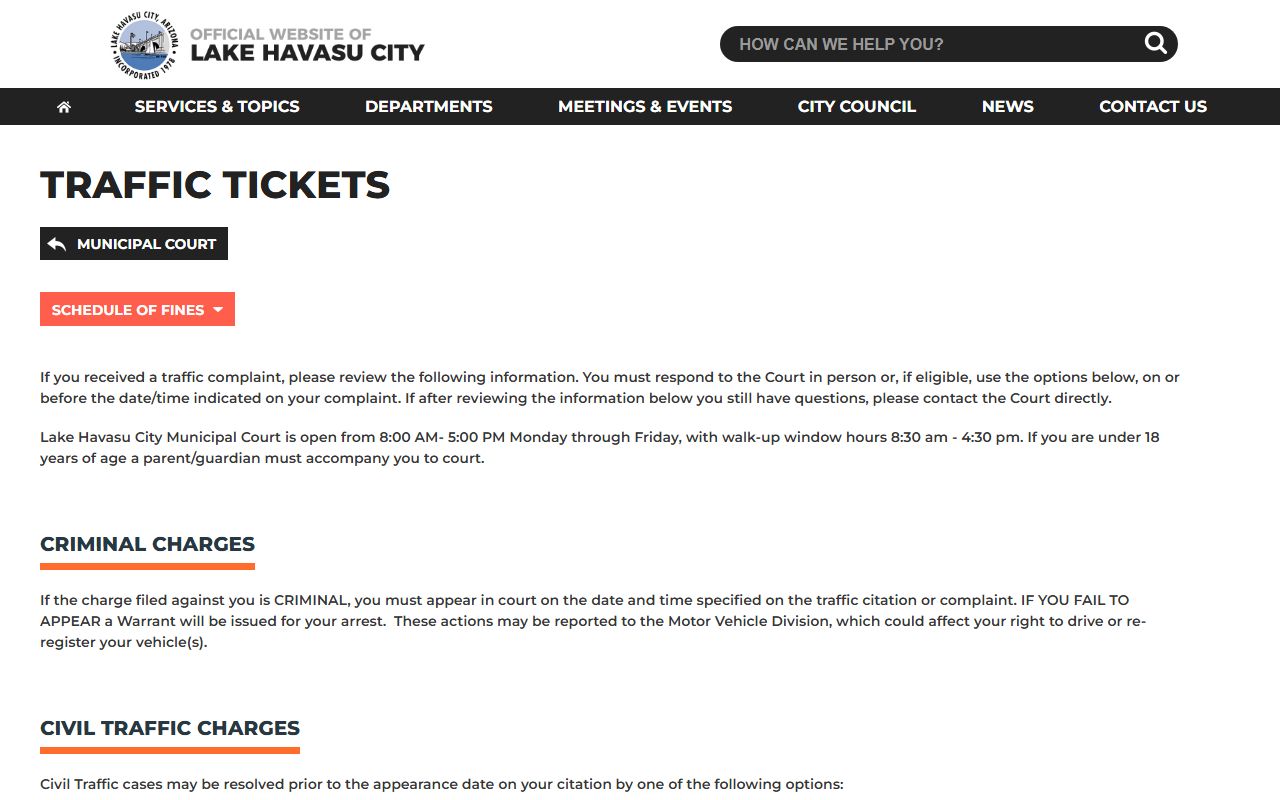
Traffic court records in Lake Havasu City are handled by the Municipal Court located at 92 Acoma Blvd S. The court processes tickets written by Lake Havasu City police officers for violations within city limits. You can get case records, pay fines, or request hearings through the Municipal Court. The lobby is open Monday through Friday from 8:30 in the morning until 4:30 in the afternoon. Tickets from county sheriffs or state troopers go to Mohave County Justice Court instead of the city court. You need to know which agency wrote your ticket to find the right court. City tickets say Lake Havasu City Police Department on the citation. County tickets list Mohave County Sheriff or Arizona Department of Public Safety.
Lake Havasu City Municipal Court Quick Facts
Municipal Court Contact Details
The Lake Havasu City Municipal Court sits at 92 Acoma Blvd S, Lake Havasu City, AZ 86403. Call (928) 732-0024 during business hours. The lobby opens at 8:30 AM and closes at 4:30 PM on weekdays. Weekends are not work days. Court holidays follow the city schedule.
If you need to visit in person, bring your citation or case number. Staff can look up cases by name but it takes longer. Parking is available near the courthouse. The building is on the south side of town near McCulloch Boulevard. You can pay fines, get records, or ask questions about your case during lobby hours.
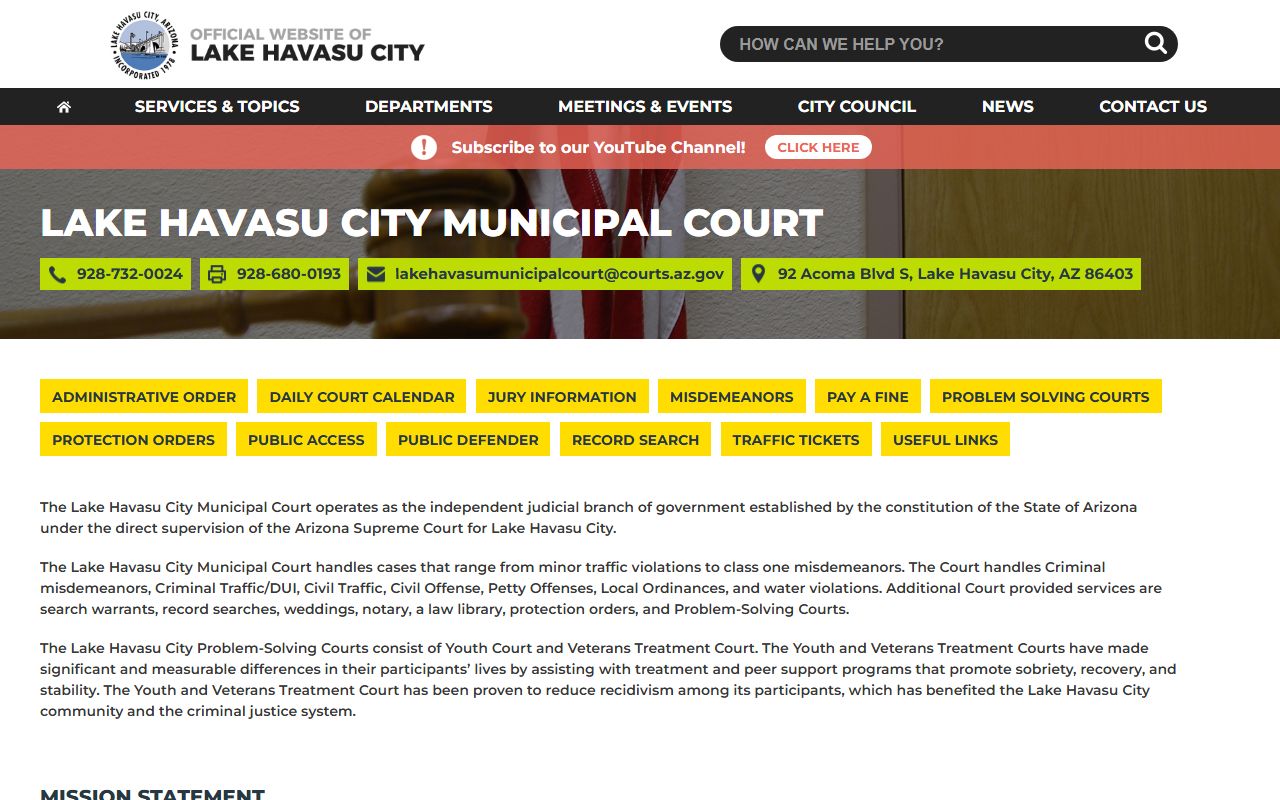
The court website at lhcaz.gov/municipal-court has forms, payment links, and general information. You can view traffic ticket details and fine schedules online. Some payments are accepted through the website but not all case types allow online payment.
Speeding Ticket Fine Schedule
Lake Havasu City uses a set fine schedule for speed violations. How much over the limit you drove determines the base fine. These amounts do not include state surcharges or assessments.
If you went 1 to 10 miles per hour over the limit, the fine is $230. Going 11 to 15 over costs $245. The fine jumps to $260 for 16 to 20 over. Driving 21 to 25 miles per hour above the posted limit brings a $275 fine. Excessive speed beyond 25 over can lead to criminal charges rather than civil traffic tickets.
No insurance violations carry much higher fines. First offense ranges from $962.90 to $1,855.90 depending on circumstances. The court does not reduce these amounts. Proof of insurance obtained after the ticket date will not eliminate the fine but may help show compliance. Each violation has its own set fine based on city ordinances and state law.
The traffic tickets page lists common violations and their fines. You can also call the court to ask about specific charges. Staff cannot give legal advice but they will tell you the fine amount for your case.
Request Court Records
To get copies of traffic court records, you must submit a request to the Municipal Court clerk. The record search fee is $51 per case. This covers the clerk's time to locate and pull the file. Copies cost 50 cents per page on top of the search fee. Certified copies add a $17 certification fee per document.
Audio recordings of hearings are available for $51 per hearing session. The court uses digital audio systems to record proceedings. You can get a CD or digital file. Video recordings are not standard for traffic cases. Most hearings are audio only.
Submit your request in writing with the case number, your name, and which documents you need. Include payment for the search fee. The court accepts checks, money orders, and cash. They process requests in the order received. Simple requests take a few days. Complex or old cases may take longer. Records are kept for periods required by state law and court rules. Very old traffic cases may no longer be on file.
Pay Traffic Fines
You can pay traffic fines in person at the courthouse. Bring cash, a check, or a money order. The court also accepts major credit cards. Payment plans may be available if you cannot pay the full amount at once. Ask the clerk about a time payment plan when you go to the court.
Some cases allow online payment through the city website. Check your citation for instructions. Not all ticket types qualify for online payment. Criminal traffic charges usually require an in-person appearance. Civil violations are more likely to allow payment without a court visit.
Paying your fine is an admission of guilt for civil traffic cases. You give up the right to a hearing. Points may be added to your driver license. Consider whether you want to contest the ticket before paying. Once paid, you cannot get a refund or change your plea.
Note: Defensive driving school must be completed before your court date if you want to avoid points.
Defensive Driving Option
Arizona law lets you attend defensive driving school for some traffic violations. The court does not add points to your license if you finish the class. You still pay fees and the course cost. Not all tickets qualify. Check your citation or ask the court clerk.
You must request defensive driving before your court date. The class must be done at least seven days before you are scheduled to appear. Use the state's approved list of schools. Lake Havasu City Municipal Court follows state rules for defensive driving eligibility. You can only use this option once every 24 months.
The Arizona Supreme Court runs a portal at azcourts.gov/drive where you can find approved schools and check if you qualify. The court does not grant extensions for defensive driving deadlines. Plan ahead and enroll early.
Mohave County Traffic Courts
Lake Havasu City sits in Mohave County. Traffic tickets written outside city limits go to the county Justice Court system. Mohave County has four Justice Courts in Bullhead City, Kingman, Lake Havasu, and Colorado City.
The Lake Havasu Justice Court handles county traffic cases for this area. It is a different court than the Municipal Court. Do not confuse the two. Your citation tells you which court to contact. County tickets list the Justice Court precinct. City tickets say Municipal Court.
For more on county traffic cases, visit the Mohave County page. The county courts have separate fees, procedures, and online systems. Make sure you file at the correct courthouse.
Registration Holds and TTEAP
If you do not pay a traffic ticket or fail to appear in court, the case goes into default. The court reports unpaid fines to the Motor Vehicle Division. Arizona uses TTEAP to enforce collections. Your vehicle registration renewal gets blocked. You cannot renew tags until you clear the debt.
The hold affects the registered owner of the vehicle. If two people own the car, both are blocked from renewing any vehicles in their name. TTEAP kicks in after two failed collection attempts. Once the hold is in place, you must pay the fine or set up a payment plan with the court. The court then sends a release to MVD. It can take a few days for MVD to process the release.
The state TTEAP program information is at azcourts.gov TTEAP page. The program covers both city and county traffic cases statewide. Deal with tickets before they go into default to avoid registration problems.
Arizona Traffic Court Resources
The Arizona Judicial Branch operates a statewide case lookup at apps.azcourts.gov/publicaccess/caselookup.aspx. This system covers many courts across the state but not all Municipal Courts participate. You can search by name or case number. It shows case status and basic information.
For driving records, visit AZMVDNow.gov to order a motor vehicle record online. A three-year uncertified record costs $3. A five-year certified record is $5. You need this if an employer or insurance company asks for your driving history. The MVD record shows points, suspensions, and convictions.
If you got a ticket on a state highway from DPS, you may need to contact the Department of Public Safety for collision reports. Their records unit is at azdps.gov records request portal. DPS handles reports for accidents on interstates and state routes investigated by state troopers.