
Access Tucson Traffic Court Records
Traffic court records in Tucson are maintained by the Tucson City Court at 103 E. Alameda Street. The court processes thousands of traffic violations each year from Tucson Police Department citations. You can search for cases online, request records through the city's portal, or visit the courthouse in person. Court hours run Monday through Friday from 8 AM to 5 PM. The office is closed on weekends and city holidays. If you need traffic case information from outside Tucson city limits, check with the Pima County Justice Court system.
Tucson City Court Quick Facts
Tucson Municipal Court Overview
The Tucson City Court handles all traffic violations issued by Tucson police officers within city limits. This court is a limited jurisdiction court under the Arizona Supreme Court's supervision. Cases include speeding tickets, running red lights, failure to yield, and other civil traffic infractions. Criminal traffic offenses like DUI or reckless driving may be filed here or in Pima County Superior Court depending on severity.
The court sits in downtown Tucson. Its address is 103 E. Alameda Street, Tucson, Arizona 85701. You can reach the main line at (520) 791-4216. Staff answer questions Monday through Friday from 8 in the morning until 5 in the afternoon. No one is there on Saturday or Sunday. City holidays close the office too. Plan your visit during regular business hours.
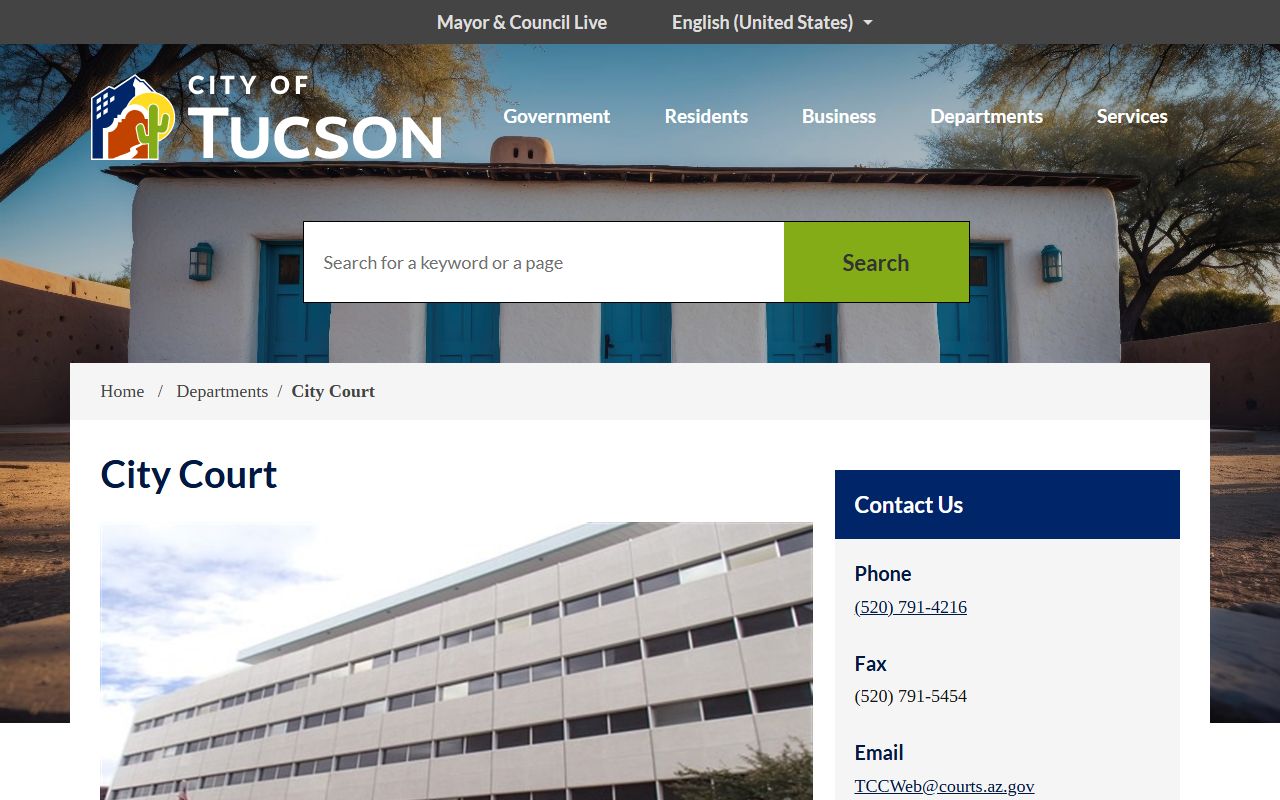
The Tucson City Court website provides general court information, procedures, and contact details. Use this resource to understand court processes before your first visit.
If your ticket came from the Pima County Sheriff's Office or Arizona Department of Public Safety instead of Tucson Police, your case goes to Pima County Justice Court. Check the top of your citation to see which agency issued it. That tells you which court system has jurisdiction.
Request Court Records
Tucson operates an online records request system for all city departments including the Municipal Court. Visit record-request.tucsonaz.gov/record-request to submit a formal request. You need to fill out a form with your name, contact info, and a description of the records you want.
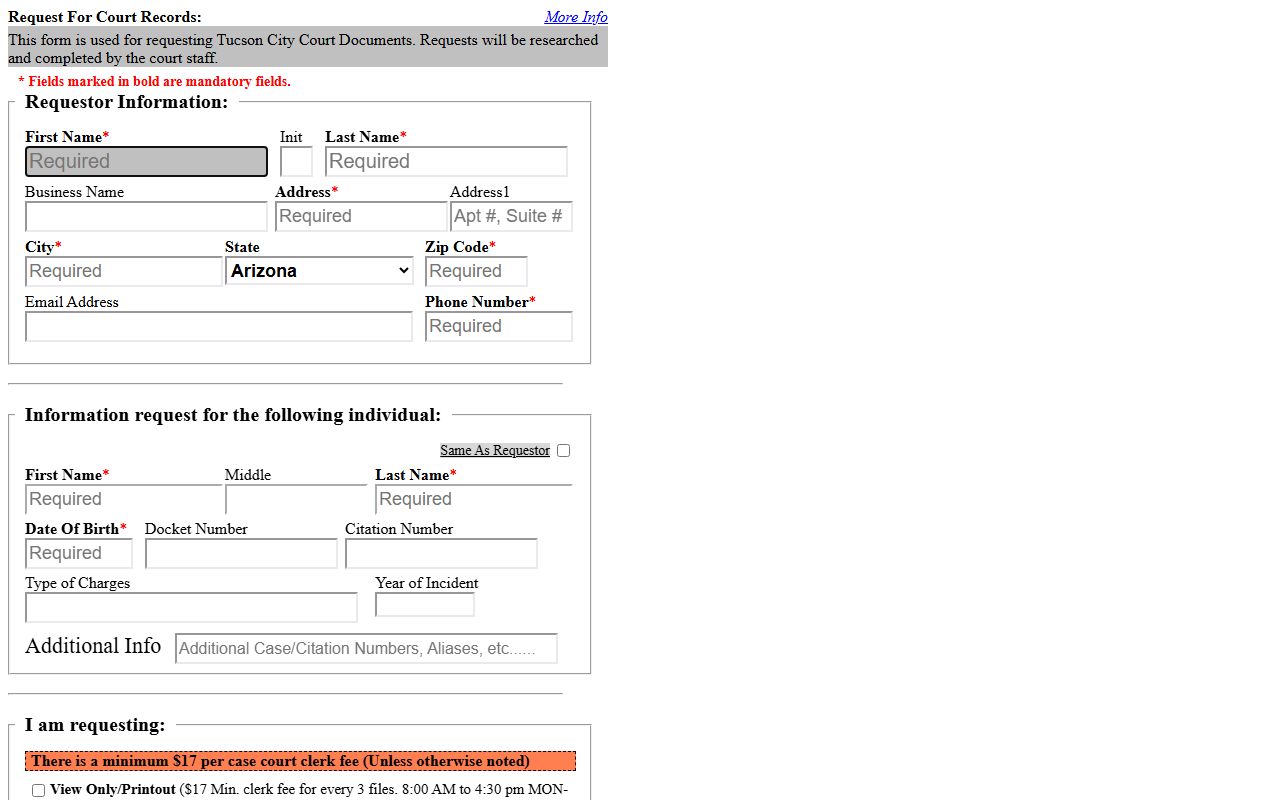
The city charges fees for copies. A minimum clerk fee of $17 applies to each case. Copies cost 50 cents per page after that. These fees follow Arizona Revised Statutes that set maximum charges for public records. Payment is required before the city releases the documents.
Processing time varies based on how many requests are in the queue. Simple requests for a single case file may be done in a few days. Complex requests with multiple cases or years of records take longer. The city will contact you about fees and estimated completion time after reviewing your request.
You can also request records in person at the court clerk's office. Bring a photo ID and the case number if you have it. Clerks can look up cases by name and date of birth but a case number speeds up the search. Walk-ins pay the same fees as online requests. Cash, checks, and cards are accepted.
Note: The court retains records according to Arizona Supreme Court retention schedules.
Pay Traffic Fines
If you owe money on a Tucson traffic case, you have several payment options. The court accepts payments online, by mail, by phone, and in person. Each method has different processing times and fees.
Online payments go through the city's payment portal. You need your case number and personal information. Credit and debit cards are accepted. A convenience fee may apply depending on the payment processor. The system is available 24 hours a day.
Mail payments should include a check or money order made out to Tucson City Court. Write your case number on the memo line. Send it to 103 E. Alameda Street, Tucson, AZ 85701. Do not mail cash. Processing takes several business days after the court receives your payment.
Phone payments use a third-party service. Call the number listed on your citation or court paperwork. Have your case number and payment method ready. Service fees apply to phone payments.
In-person payments happen at the clerk's window during business hours. The court takes cash, checks, money orders, and cards. Get a receipt for your records. If you cannot afford to pay the full amount at once, ask about payment plans. The court may set up a schedule if you qualify.
Defensive Driving School Option
Arizona law allows some drivers to attend defensive driving school instead of having points added to their license. You must be eligible under ARS § 28-3392. Not all violations qualify. The court decides if you can use this option.
You must complete the class at least seven days before your court date. The Arizona Supreme Court runs a portal at azcourts.gov/drive with approved schools. Choose one from the list. Pay the school fee directly to them. After you finish, the school sends proof to the court.
The Arizona Supreme Court does not grant extensions. If you miss the deadline, you lose the defensive driving option. Plan ahead. Enroll early. Allow time for technical problems or scheduling conflicts. Most schools let you take the class online at your own pace.
Completing defensive driving means no points go on your Motor Vehicle Division record. That helps keep insurance rates down. You still pay court fees and the school tuition. But you avoid the long-term cost of higher premiums.
License Suspensions and TTEAP
Unpaid traffic fines in Tucson can lead to registration holds through the Traffic Ticket Enforcement Assistance Program. TTEAP is run by the Arizona Motor Vehicle Division. The program places a hold on your vehicle registration if you have outstanding court debts. You cannot renew your plates until the debt is paid or a payment plan is active.
The TTEAP program page explains how the system works. After two failed collection attempts, MVD adds the hold. It affects the vehicle owner and any co-owner. Paying the court removes the hold but MVD may take a few days to update their system.
Check your driving record at AZMVDNow.gov to see if you have holds or suspensions. The Motor Vehicle Division charges fees for record requests. An uncertified three-year record costs $3. A certified five-year record is $5. These fees are set by ARS § 28-446.
If your license is suspended for failure to appear in court, contact Tucson City Court immediately. You may need to appear before a judge or pay outstanding fines. The court can issue an abstract to MVD that lifts the suspension. Then you must follow up with MVD to reinstate your license. Reinstatement fees apply.
Arizona Statewide Court Tools
The Arizona Judicial Branch offers online tools that cover courts across the state. The Public Access to Court Case Information system searches 153 out of 180 courts in Arizona. This includes Justice Courts, Superior Courts, and some Municipal Courts. Enter your name or case number to see results from multiple jurisdictions.
The statewide system does not include all Municipal Courts. Some cities like Tucson run separate databases. Check both the state portal and the local court website for the most complete search. Neither system replaces official court records. For legal purposes, request certified copies from the clerk.
Arizona Department of Public Safety maintains collision reports for crashes on state highways and interstates. If your traffic case involves an accident investigated by DPS, you can request the report through the DPS records portal. Paper copies mailed to you cost $9 for the first nine pages plus 10 cents per additional page.
Other Pima County Traffic Courts
Tucson is the largest city in Pima County but several other jurisdictions handle their own traffic cases. If you received a citation in a neighboring area, check with that court:
- South Tucson - Separate city with its own Municipal Court
- Oro Valley - Municipal Court handles traffic violations within city limits
- Marana - City Court for Marana Police tickets
- Sahuarita - Municipal Court south of Tucson
For traffic violations outside any city limits in Pima County, cases go to the Pima County Justice Court. The main office is at 240 N. Stone Avenue in Tucson. Phone number is (520) 724-3171. That court also has satellite locations around the county.
Legal Authority and Statutes
Traffic court procedures and record access rules come from Arizona state law. Key statutes include ARS § 28-447 which defines public records at MVD. That law says most records are open to the public but medical reports are private.
Copy fees are set by ARS § 28-446. The statute allows MVD to charge up to three dollars per item for records. Municipal Courts follow ARS § 39-121 for general public records inspection rights.
Arizona voters passed a law in 2022 that lets people seal old criminal records. ARS § 13-911 took effect December 31, 2022. It allows petitions to seal criminal traffic convictions after a waiting period. Civil traffic violations are not criminal cases so they do not qualify for sealing. Only convictions for misdemeanor or felony traffic offenses can be sealed under this law.