
Find Cochise County Traffic Records
Traffic court records in Cochise County are maintained by six Justice Courts that handle citations for violations in their respective districts. If you got a ticket from a state trooper or county deputy, your case gets filed at one of these courts. The system covers cases across the entire county, from Bisbee in the south to Willcox in the north. Each court has its own staff and contact number. You can search for cases using the statewide database or contact the specific Justice Court that issued your citation. Most records include violation details, court dates, fines, and payment status.
Cochise County Traffic Court Quick Facts
Six Justice Court Locations
Cochise County operates six Justice Courts spread across the region. Each court serves its geographic area and handles traffic tickets issued within its boundaries. The courts are independent of each other. Staff at one location cannot access files from another precinct.
The Bisbee Justice Court handles the southern part of the county. For traffic matters, call 520-432-9548. The Douglas Justice Court serves the Douglas area. Reach their traffic division at 520-805-5640 Extension 6. Sierra Vista Justice Court covers the central region and Fort Huachuca vicinity. Their main line is 520-803-3800. Three additional Justice Courts serve Willcox, Benson, and the northern parts of the county.
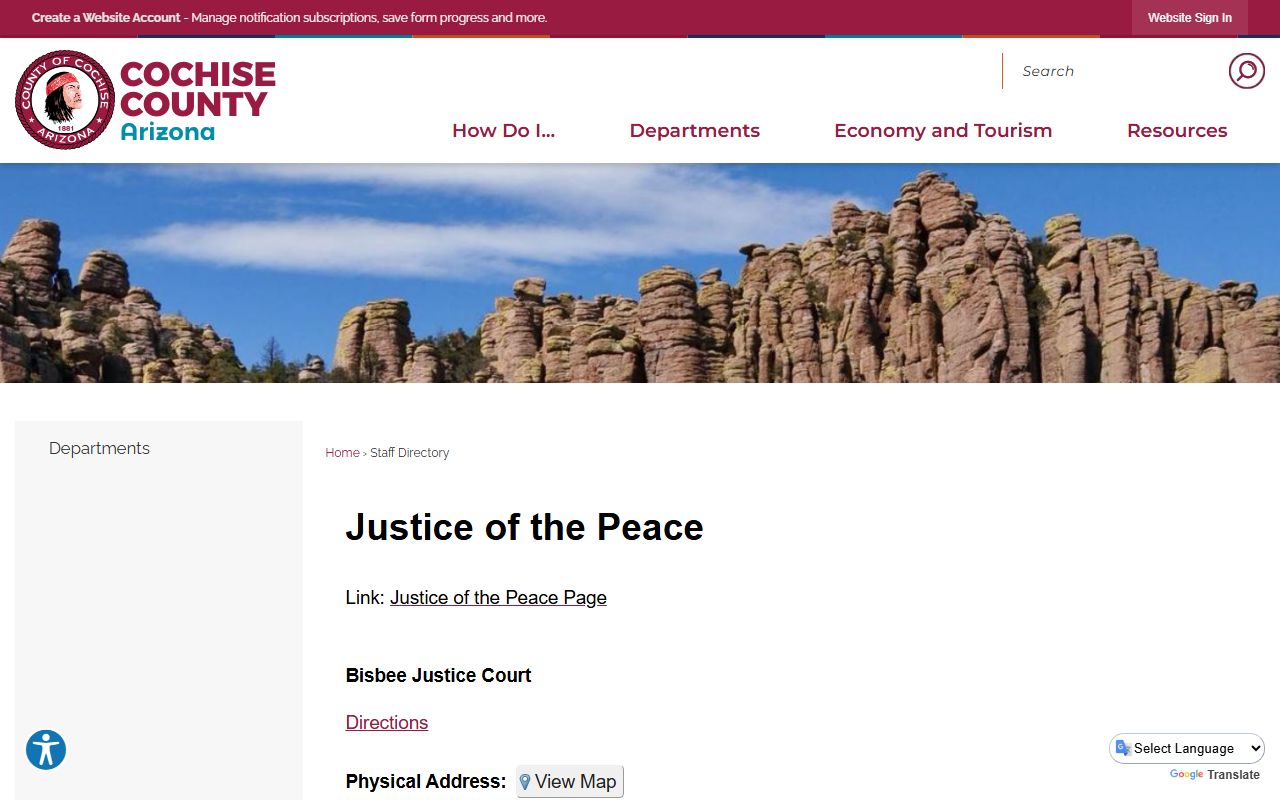
Your citation shows which court filed your case. That court is where you must respond. Do not contact a different precinct. They cannot help with cases filed elsewhere. Each location sets its own hours and procedures for walk-in visits. Most courts are open from 8 AM to 5 PM on weekdays. State holidays may close the offices. Call ahead if you plan to visit in person.
The county website at cochise.az.gov lists contact information for all six Justice Courts. The page includes phone numbers, addresses, and staff directories. It also provides links to online services where available.
Search Traffic Cases Online
Arizona runs a statewide case lookup system at apps.azcourts.gov/publicaccess/caselookup.aspx. The database covers 153 out of 180 courts in Arizona, including Cochise County Justice Courts. You can search by name or case number. Results show your charges, court dates, and balance due.
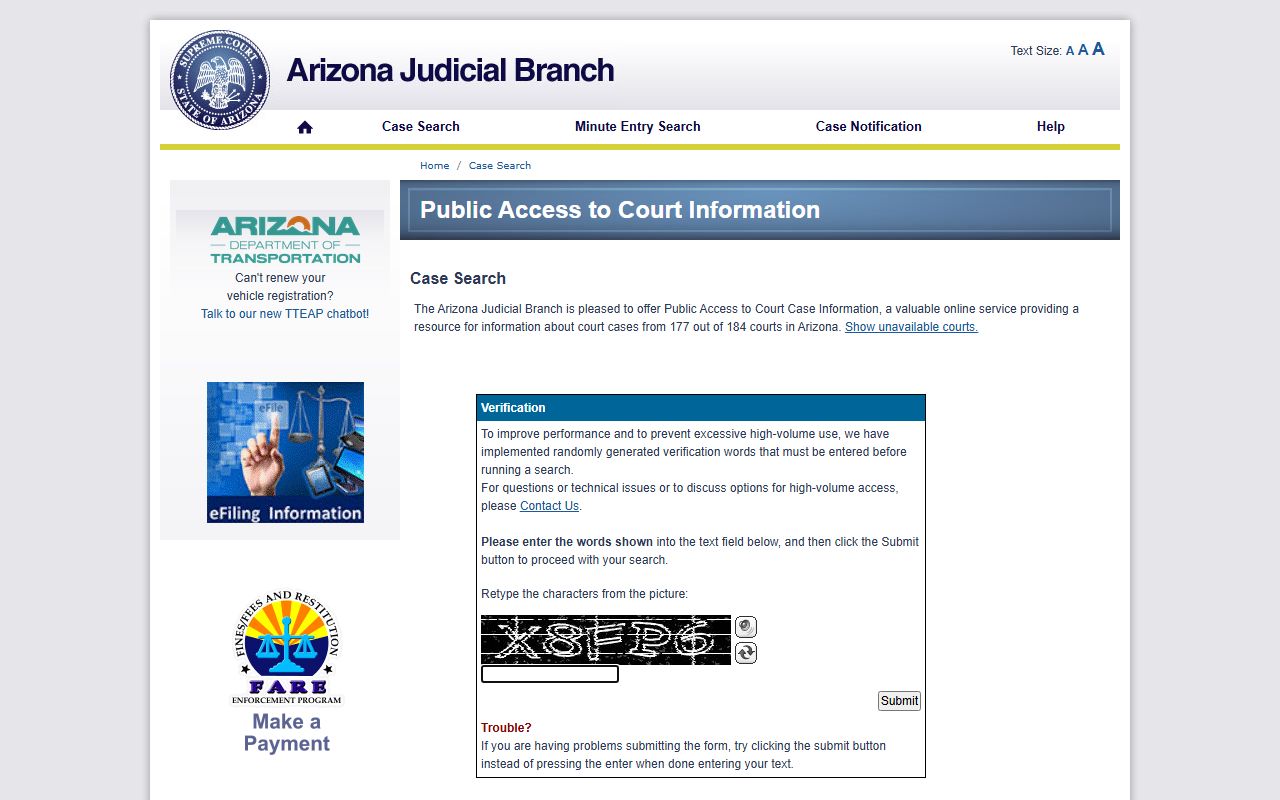
The search is free. No login is required. It works on phones and desktop computers. New cases may take a few days to appear in the system after a ticket is issued. The website states that online information is not the official court record. For certified copies or official documents, you need to contact the court directly.
Some Justice Courts may have their own local search systems in addition to the statewide portal. Check with the specific court that handles your case. They can tell you what online tools they offer and how to access them.
Traffic Violation Procedures
When you get a traffic ticket in Cochise County, the citation lists your court date and location. You must respond before the deadline. Ignoring a ticket leads to serious problems. The court may issue a default judgment. Your license can be suspended. The Motor Vehicle Division will place a hold on your registration through the TTEAP program.
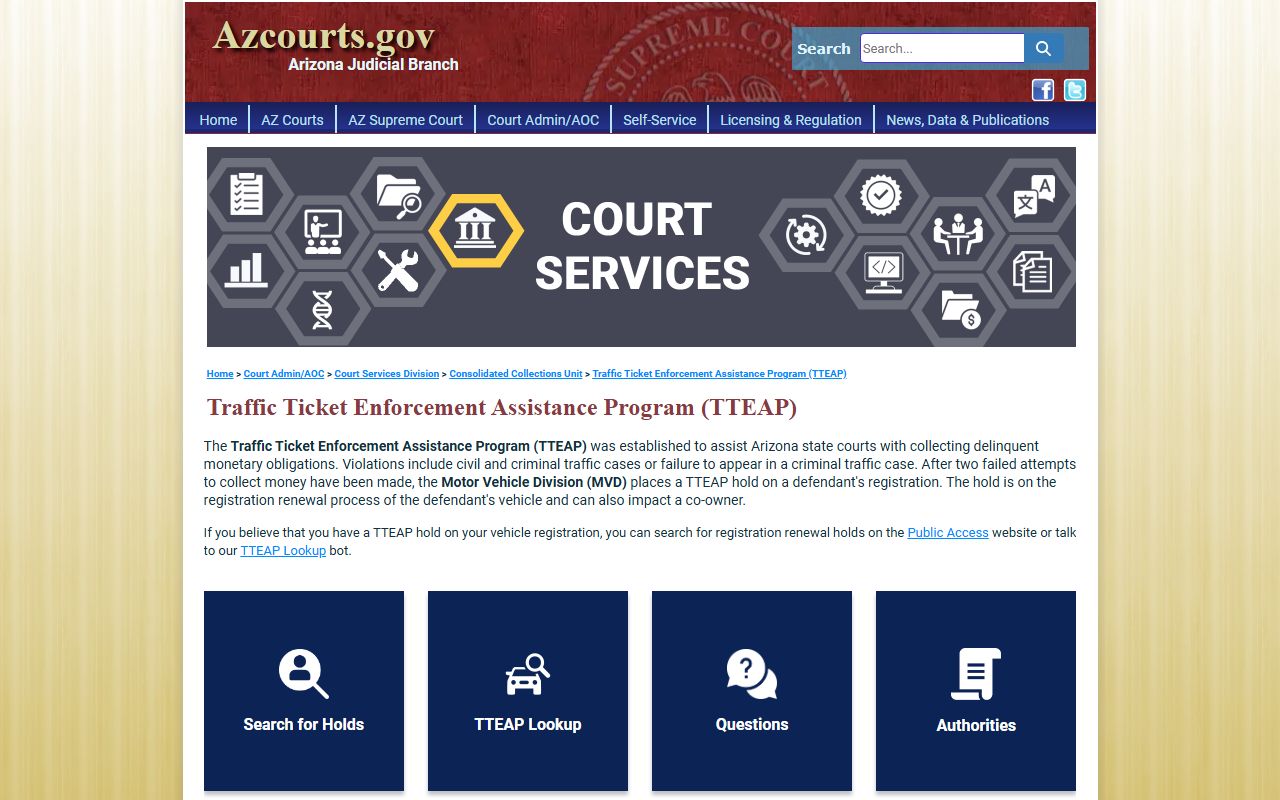
TTEAP stands for Traffic Ticket Enforcement Assistance Program. The state uses it to collect unpaid traffic debts. After two failed collection attempts, MVD puts a hold on your vehicle registration. You cannot renew registration until you clear the debt. The hold affects the vehicle owner and any co-owner. More details about TTEAP are available at azcourts.gov.
You have options for responding to a citation. Pay the fine in full. Request a hearing to contest the charge. Attend defensive driving school if you qualify. Each option has different steps and deadlines. The court can explain which options apply to your specific violation. Call the Justice Court listed on your ticket to ask questions.
Defensive driving school lets you avoid points on your license for certain violations. You must complete the class at least seven days before your court date. The Arizona Supreme Court does not grant traffic citation extensions. If you cannot finish the class on time, you lose that option. Visit azcourts.gov/drive to check your eligibility and find approved schools.
Court Records and Copy Fees
Arizona law sets standard fees for court records. Under ARS § 12-115, copy fees are 50 cents per page. Research fees cost $17 per case under ARS § 22-404. Certification adds extra charges that vary by court. Some courts charge $17 for certification. Others charge up to $35.
To request records, contact the Justice Court that handled your case. Provide the case number if you have it. Clerks do not perform background checks. Requests without case numbers may be declined. The court keeps traffic records for a specific retention period. Once that period expires, the files are destroyed. Most civil traffic cases are kept for one year after final adjudication. Criminal traffic cases stay on file longer.
You can request copies in person or by mail. Some courts accept online requests. Payment must be included with your request. Courts accept cash, checks, and money orders. Credit card payments may have convenience fees. Ask the specific court about their payment methods and how to submit requests.
Driver and Vehicle Records
The Arizona Motor Vehicle Division maintains driving records that show your traffic violations. These records are separate from court files. MVD records list all citations, convictions, and points on your license. You can request your own driving record online at AZMVDNow.gov.
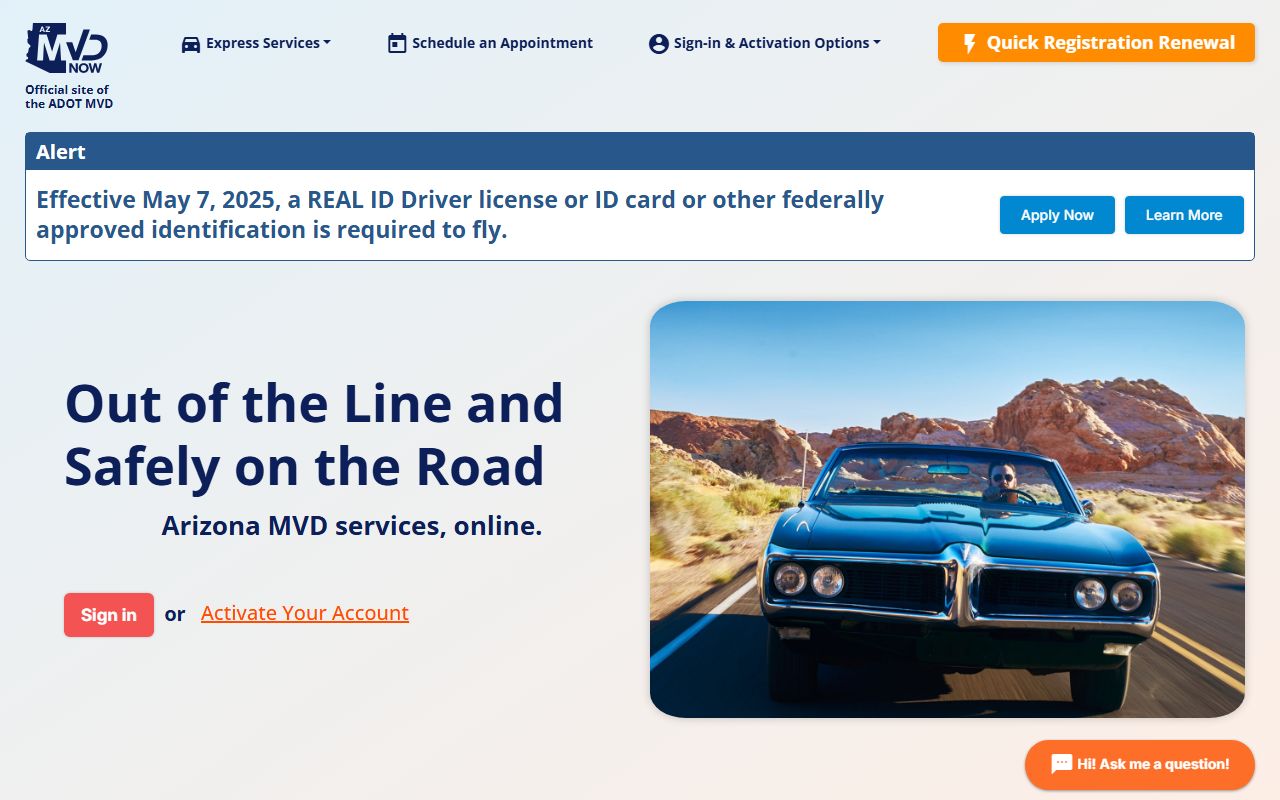
An uncertified three-year driving record costs $3. A certified five-year record costs $5. These fees are set by ARS § 28-446. You can also get records by mail or at an MVD office. Use form 46-4416 for mail requests. Your signature must be notarized or witnessed by an MVD agent.
The Federal Driver's Privacy Protection Act governs how MVD can release your information. Medical records are not public under ARS § 28-447. Other parts of your driving record may be available to third parties for specific purposes. If you are a peace officer, judge, or prosecutor, you can request redaction of personal information under ARS § 28-454.
DPS Collision Reports
If your traffic incident involved a collision investigated by the Department of Public Safety, you can request a copy of the accident report. The DPS Department Records Unit handles these requests. They keep records for crashes on Interstate highways and state routes where DPS troopers responded.
Reports are ready within 14 days of the incident. You can request them through the DPS records portal. A paper report sent by U.S. Mail costs $9 for the first nine pages. Each additional page is 10 cents. Under ARS § 28-667, you cannot use accident reports for commercial solicitation.
For technical support with the DPS portal, call 602-223-2999 and press option 8. For general questions about reports, call the Department Records Unit at 602-223-2000 and press option 2. Staff can tell you if a report exists for your incident and how long it will take to process your request.
Sealing Traffic Convictions
Arizona allows certain criminal records to be sealed. Since December 31, 2022, you can petition to seal criminal traffic conviction records under ARS § 13-911. This law does not apply to civil traffic violations. It only covers criminal traffic offenses.
To qualify, you must meet specific requirements. Wait times apply based on the offense type. Not all convictions are eligible. The court has discretion to grant or deny your petition. If approved, the record is sealed from public view but still accessible to law enforcement and courts for certain purposes.
Contact the court that handled your criminal traffic case to ask about sealing procedures. They can tell you if your conviction qualifies and what forms to file. There may be fees involved. Legal aid organizations can help if you cannot afford an attorney.
Pay Traffic Fines
Each Justice Court accepts payments for traffic fines and fees. Most take cash, personal checks, and money orders. Credit and debit cards are usually accepted. Visa, MasterCard, American Express, and Discover work at most locations. Some courts charge a convenience fee for card payments.
Many courts use the statewide AZCourtPay.com system for online payments. You can pay by phone or web. A small service fee applies to electronic payments. The site is available 24 hours a day. You need your case number to make a payment.
If you cannot pay the full amount, ask the court about payment plans. A time payment fee of $20 applies under ARS § 12-116. You must apply for a payment plan before the deadline on your citation. The court reviews your financial situation. Not all requests are approved. If denied, you must pay the full amount by the due date.
Returned checks cost $25 extra. Default fees range from $25 to $75 depending on the court and violation. These fees add up fast if you ignore deadlines. Pay on time or contact the court before the due date to avoid extra charges.
Note: Cryptocurrency, PayPal, Venmo, and Zelle are not accepted at Arizona courts.
Arizona Public Records Access
Court records in Arizona are generally public under ARS § 39-121. This statute governs inspection of public records across the state. Traffic court records fall under this law unless a specific exemption applies.
You have the right to inspect and copy public court records. The court must allow access during regular business hours. They can charge fees for copies and research. They cannot deny access without a legal reason. Some records are confidential by law or court order. Juvenile cases and certain sealed records are not public.
If a court denies your records request, ask for the legal basis. You may have the right to appeal the decision. Public records laws have specific procedures and timelines. Courts must respond to requests within a reasonable time. Delays can happen if the request is large or complex.
Nearby County Courts
If your traffic violation occurred in a neighboring county, check these resources: